
Searching Los Angeles County Probate Records on PAOS
The PAOS civil and probate name index is the main search tool for Los Angeles County probate records. The index returns case number, litigant or party name, case type, filing date, filing location, and the count of available imaged documents. Probate appears together with civil, family law, and small claims in this single name index. Sealed cases and certain confidential filings do not appear in the public list.
Probate document images sit in a separate tool. The PAOS document image search needs a case number. Probate documents are scanned PDFs. Per-page fees apply at checkout. The guest information page lists the fee authority and the retention window for receipts. Researchers should keep the receipt for any large image order in case of download issues.
Probate Coverage Date Ranges
Probate online coverage starts in 1983 for the PAOS name index. Document images for probate begin January 1, 2001. The court warns that not every document filed in the covered range is available online. New filings and prior filings are added daily as scanning catches up. Older probate files may require an Archives request through the courthouse handling the case.
- PAOS name search for probate: 1983 to present.
- PAOS document images for probate: January 1, 2001 to present.
- Sealed and courtroom-filed documents: not available online.
- Older files: contact LA Court Archives through the filing courthouse.
Note: Recent filings may take 24-72 hours to appear in the PAOS name search after the clerk processes the petition.
The LA Superior Court Probate Division
The Superior Court of California, County of Los Angeles lists Probate as one of its nine divisions. The courthouse browser shows two probate locations. Probate cases include decedent estates, trust petitions, guardianships, and conservatorships. The probate calendar at each courthouse has its own department numbers, judicial officers, and probate notes practice. Local probate practice is highly procedural, and the court issues general orders that change e-filing rules from time to time.
The court released a 2026 General Order on probate e-filing signed by Presiding Judge Sergio C. Tapia II. The order documents the current state of probate e-filing policy. Practitioners and pro se filers should check the latest version before filing.
Stanley Mosk Probate Department
The Stanley Mosk Courthouse hosts the central probate calendar. Stanley Mosk handles civil, family law, probate, small claims, appellate, and appeals work and is the main public counter for record copies in the central district. Probate filings, hearings, and probate notes are managed through the probate department at Stanley Mosk.
Stanley Mosk Courthouse - Probate
111 North Hill Street
Los Angeles, CA 90012
(213) 830-0800
Mon-Fri, 8:30 a.m. to 4:30 p.m.
Stanley Mosk also houses the central civil records counter in Room 112 and the civil filing window in Room 102, which matters when a probate petitioner needs a certified copy along with a case-related civil filing.
Michael Antonovich Antelope Valley Probate
The Michael Antonovich Antelope Valley Courthouse hosts the North County probate calendar. The courthouse handles civil, criminal, family law, juvenile, probate, small claims, and traffic in Lancaster. North County residents file probate petitions and attend probate hearings at this courthouse rather than driving downtown to Stanley Mosk.
Antelope Valley Courthouse - Probate
42011 4th Street West
Lancaster, CA 93534
Mon-Fri, court hours
The PAOS name index returns filing location as part of each result. The filing location tells the user whether to handle a counter visit, certified copy order, or in-person record review at Stanley Mosk or at the Antelope Valley Courthouse.
What Probate Cases Include
Los Angeles County probate covers a wider range of cases than most readers expect. The Probate Division does not handle only wills and estates. It also handles trust supervision, guardianships for minors, and conservatorships for adults who cannot manage their own affairs. Each case type has its own forms, hearing schedule, and notice rules.
- Decedent estates and petitions for probate or administration.
- Wills, codicils, and contested wills.
- Letters testamentary and letters of administration.
- Trust petitions, accountings, and removals.
- Guardianships for minors.
- Conservatorships for adults.
- Inventories, appraisals, and creditor claims.
Petition for Probate Under Section 8000
California Probate Code section 8000 governs petitions for administration of a decedent's estate. The petition starts the formal probate process. It opens the case, identifies heirs and interested parties, and asks the court to appoint a personal representative. The statewide California Courts probate self-help guide walks readers through forms and timing.
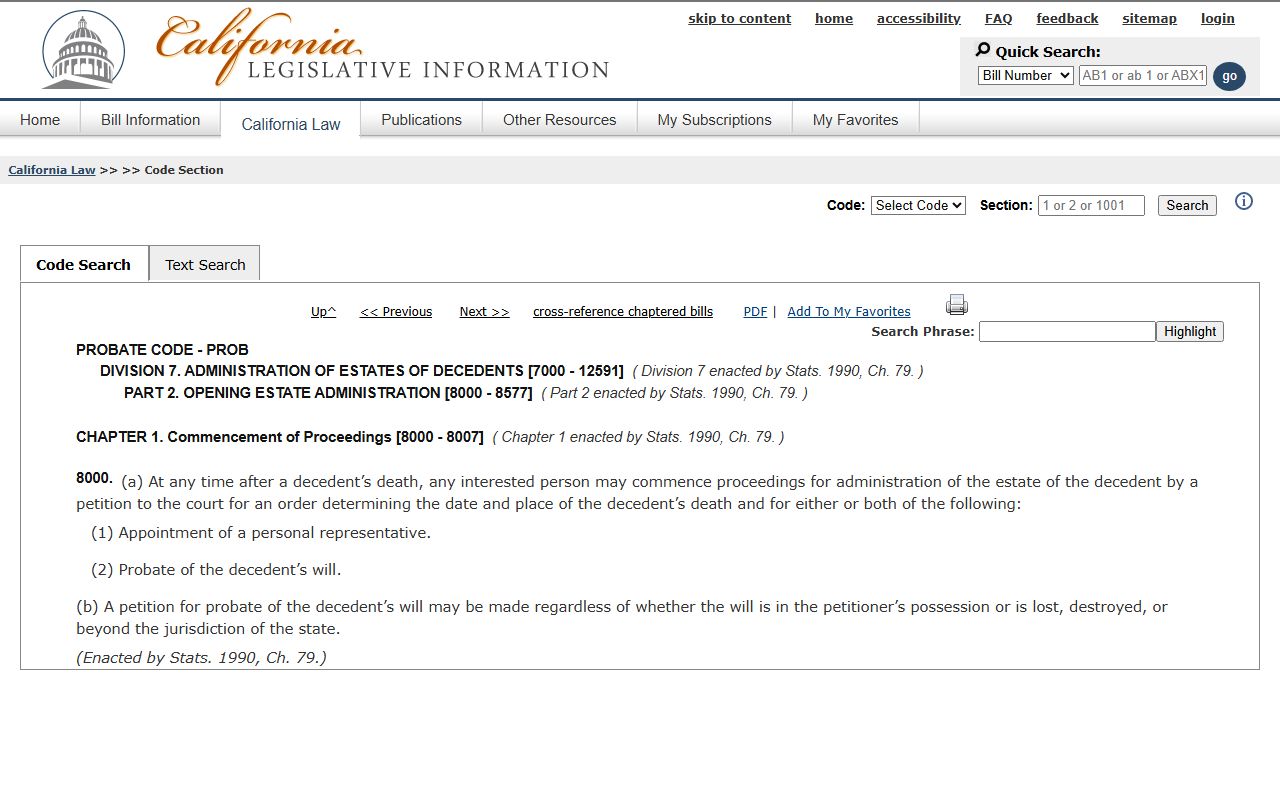
The statute text on Leginfo is the controlling reference for petition content. Los Angeles County probate practitioners cross-check the statute against the local probate notes before each hearing.
Small-Estate Affidavit Under Section 13100
Not every estate needs a full probate. California Probate Code section 13100 sets a small-estate affidavit procedure that lets heirs collect personal property without opening a probate case, when the estate value sits under the statutory threshold and the statute's other conditions are met. The affidavit is a fast option for small bank balances, unpaid wages, and similar items.
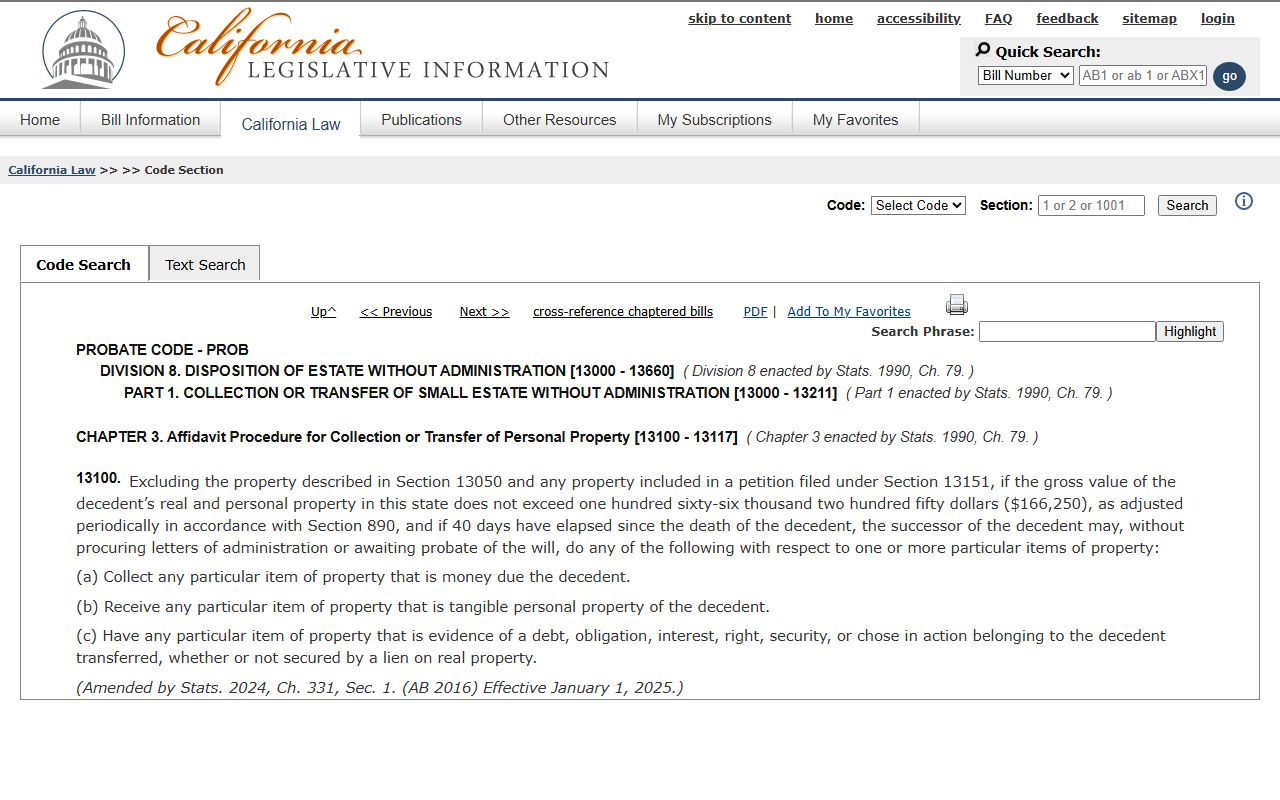
The statute text is the rule that holders of estate property check before releasing assets on an affidavit. Banks and brokerages may also ask for ID and a death certificate before honoring the affidavit.
Probate Glossary
Probate documents use a specific vocabulary. The brief glossary below covers the terms that show up most often in Los Angeles County probate filings, hearings, and minute orders.
- Testator
- The person who made a will.
- Executor
- The person named in a will to carry it out.
- Intestate
- Dying without a valid will; the estate passes under state intestacy rules.
- Guardianship
- Court appointment of an adult to care for a minor's person or estate.
- Conservatorship
- Court appointment to manage an adult's person or estate when the adult cannot do so.
- Letters testamentary
- The court order that gives an executor power to act for the estate.
- Inventory
- The personal representative's filed list of estate assets and their values.
- Accounting
- The filed report of estate receipts, disbursements, and distributions.
- Small estate affidavit
- An affidavit under Probate Code section 13100 used to collect small estates without full probate.
Confidential Probate Material
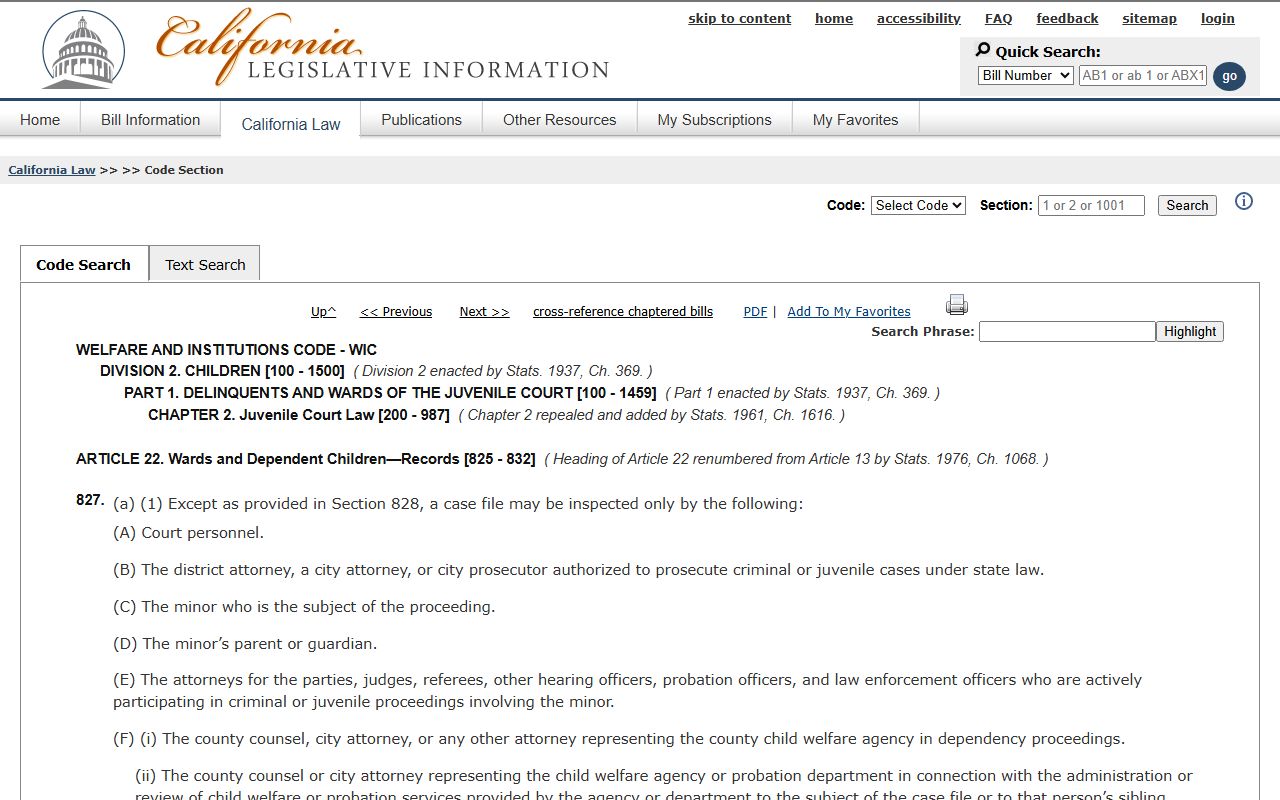
Not every probate filing is public. The PAOS document image tool warns that confidential cases, sealed cases, and documents filed in a courtroom may not be available online. Conservatorship medical and capacity declarations are often filed under seal. Guardianship reports involving minors may be limited. Records linked to juvenile case files fall under the broader Welfare and Institutions Code section 827 access rule.
Adoption-linked probate or related family records may also be sealed under California Family Code section 9200. When the PAOS index hides a document, the next step is a request to the courthouse handling the case, not a third-party lookup.
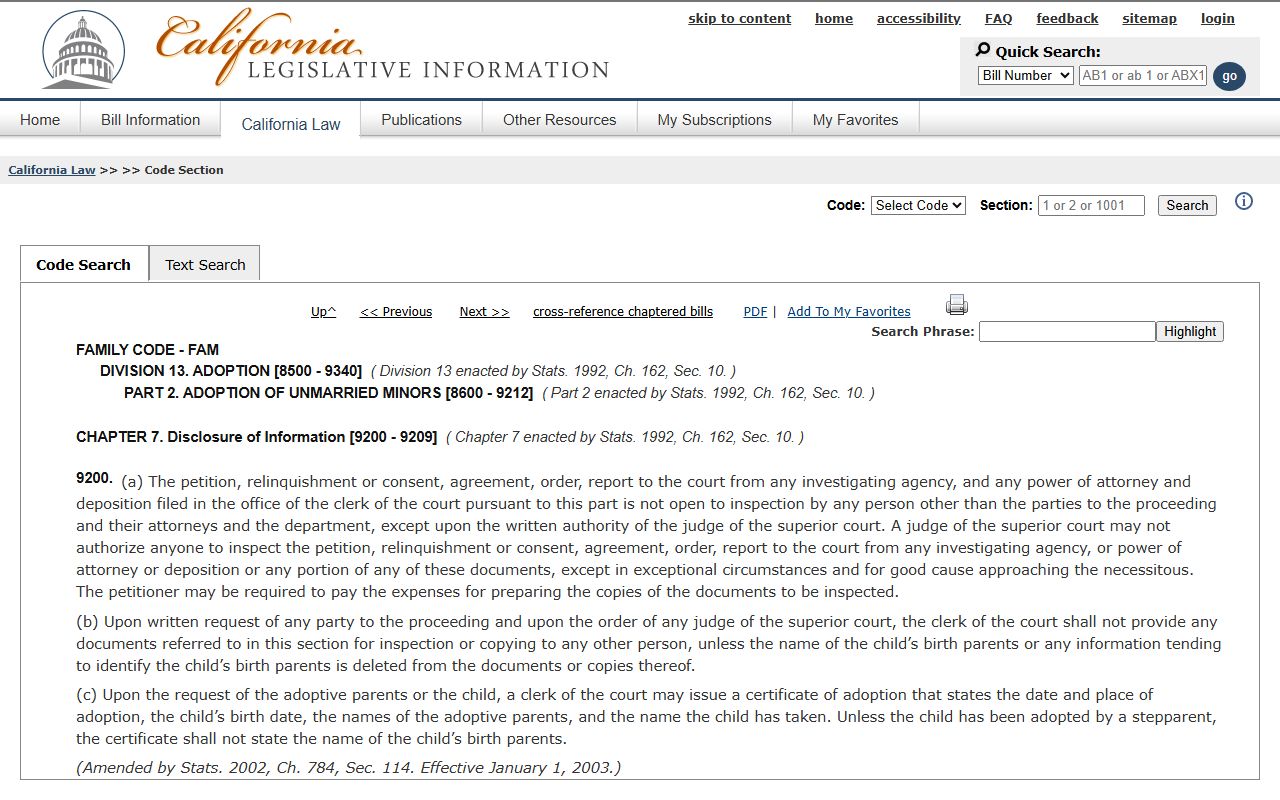
The Family Code section 9200 text is the statutory hook used by clerks when denying public access to adoption-linked filings.
Probate E-Filing - 2026 General Order
Los Angeles Superior Court probate e-filing rules change by general order. The 2026 General Order signed by Presiding Judge Sergio C. Tapia II is the current source of record on probate e-filing policy. Counsel and self-represented filers should pull the latest general order from the LA Court site before each filing. Local rules and the court technology vendor may shift filing acceptance windows.
Note: The 2026 General Order is the current public source for Los Angeles County probate e-filing changes; always confirm before filing.
Probate Notes and Hearings
Probate notes are the court's pre-hearing checklist on each case. The probate examiner reviews the file, lists defects, and posts notes for counsel and pro se petitioners. Counsel reviews the notes before the hearing and resolves each item before the court calls the case. A clean note set is the fastest route to an order at hearing. Missing items push the case to a continued date.
Hearings in Los Angeles County probate run on a department-by-department calendar. The probate department checks tentative rulings and notes against the filing. The PAOS document image search returns the minute orders and probate notes for many cases once images are scanned.
How Probate Works Step-by-Step
Probate moves through a fixed set of steps in California, with local variations in Los Angeles County. The steps below mirror the LA Court probate flow.
- Decide whether formal probate is required, or whether a small-estate affidavit fits.
- File the petition in the probate division with the right Judicial Council and local forms.
- Give statutory notice to heirs, beneficiaries, creditors, and interested parties.
- Attend the hearing; review probate notes before the hearing.
- If appointed, receive letters and start administering the estate.
- Inventory and appraise assets, notify creditors, handle claims, sell property if authorized.
- File the account or report and the petition for distribution.
- Obtain the final order and the order of discharge.
Older Probate Files and Archives
Older Los Angeles County probate files may not appear in PAOS. Pre-1983 name searches return nothing in the online index. Pre-2001 documents are not in the image tool. For older probate files, the path is a written request to the courthouse that handled the case, or a referral to LA Court Archives. Genealogy researchers should also check the Los Angeles County Archives for transferred historical estate files.
A second possible avenue for older probate context is the related Penal Code section 1203.4 when an estate file overlaps with sealed criminal history. The cross-reference shows up in some older estate cases.
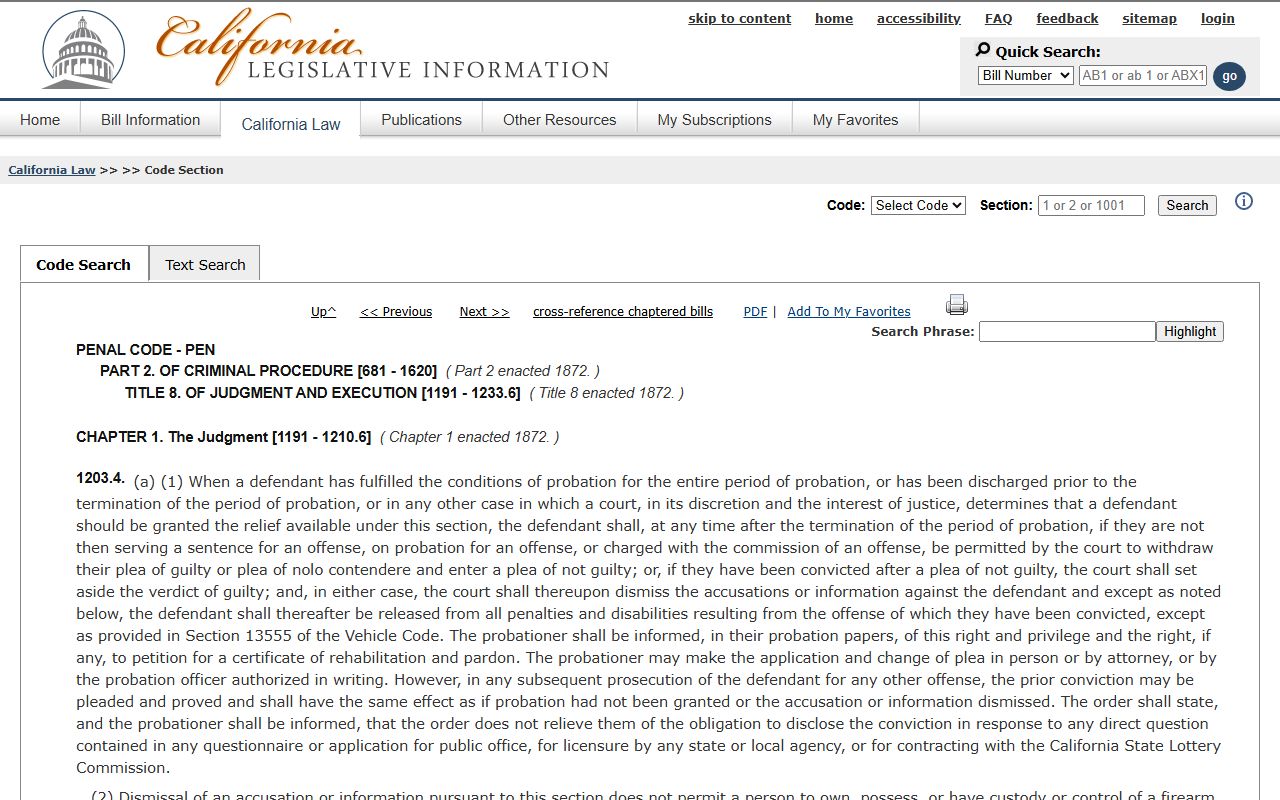
The section 1203.4 text is also useful when an estate involves a decedent whose record was previously dismissed under that statute.
When Probate Crosses Criminal Investigations
Estate cases sometimes cross paths with active criminal investigations, such as elder financial abuse or contested conservatorships. The Los Angeles County District Attorney handles those investigations through specialized units. Probate counsel should not pull confidential criminal records through the probate file. The DA office is the right point of contact when a probate case turns up evidence of a crime.
The DA office homepage lists current units, news, and victim service contacts. Estate counsel should keep the DA contact at hand when an estate matter shows signs of fraud, theft, or elder abuse.