
How to Find Recently Released LA County Inmates
The first stop for a recent county release is the LASD Inmate Information Center. The portal shows current custody status. It also shows release date when the data is in the system. A name that drops off the live roster has often been released, transferred, or moved to a holding area for processing. Sheriff records can lag real-world custody by two hours after booking, and release status may also lag while the system updates.
The LASD custody reports page publishes Inmate Releases and Pending Releases. These reports are useful for verifying a release window and seeing the list of people processed by Sheriff custody on a given day. A user who knows the booking number can match it against the pending or recent release list.
If the live roster and the reports page do not match, call the Sheriff. The general custody line is (213) 473-6100. The Inmate Answering Service is (213) 473-6002. Sheriff staff can confirm release status and the facility that processed the release.
The custody reports page is shown below. The image links back to the source on the Sheriff's site.
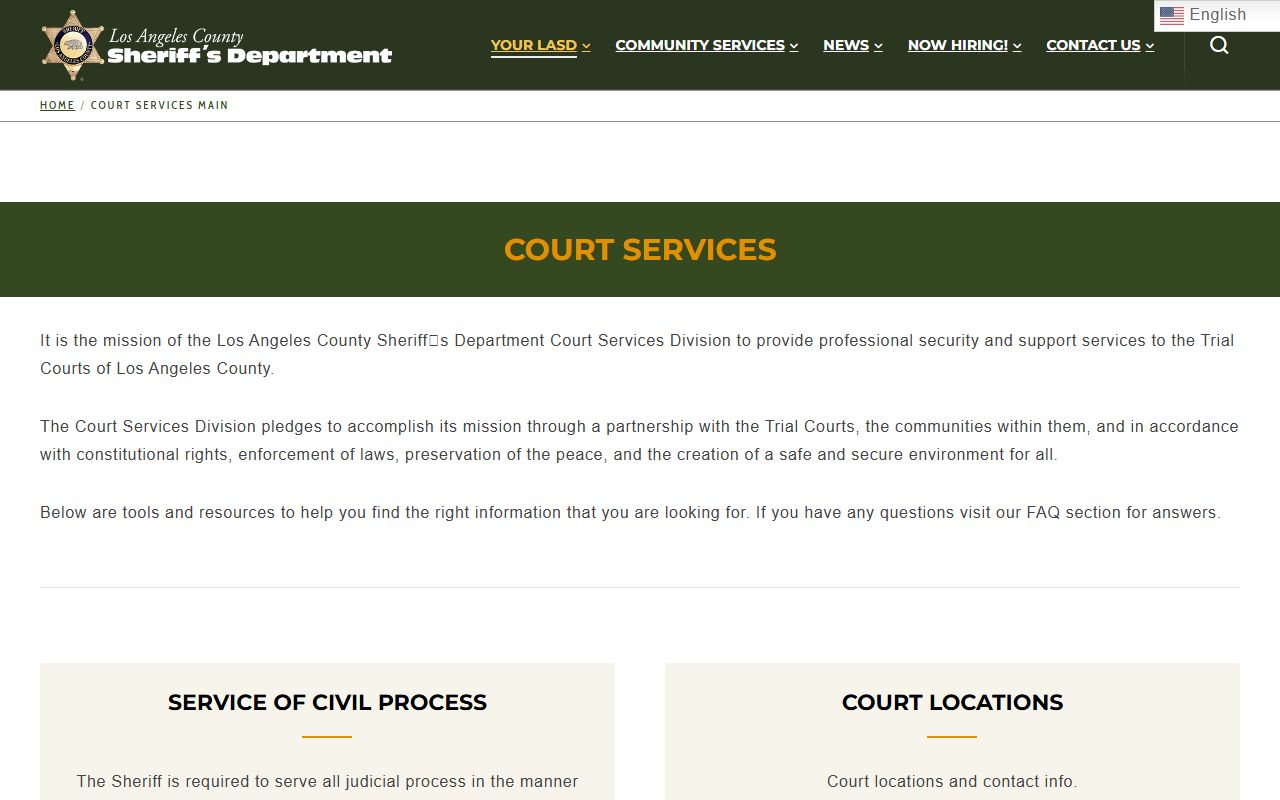
Court Services links Inmate Release Information, Releases, and Pending Releases from the same page.
How to Verify a Los Angeles County Inmate Release
A clean verification uses two sources. Start with the live roster, then confirm against the reports page or a phone call. The steps below cover the common workflow.
- Run a name search on the LASD Inmate Information Center. Note the booking number and last housing location.
- Open the LASD custody reports page. Check Inmate Releases and Pending Releases for the booking number or name.
- If the name is on neither list and is no longer in custody, call the Inmate Answering Service at (213) 473-6002.
- If the inmate was sentenced and sent to state prison, search the CDCR inmate locator.
- If the case is federal, search the Federal Bureau of Prisons locator.
- Set up a VINELink alert so future custody changes come by phone, email, or text.
Release can happen after bail is posted, charges are not filed, a court orders release on own recognizance, a sentence expires, custody credits satisfy the term, a hold is lifted, transfer to another agency occurs, or a facility processes an administrative release. Each path moves the record at a different speed.
LASD Custody Reports for Inmate Releases
The Sheriff's custody reports page is the official spot for release data outside of the live roster. It lists Inmate Releases and Pending Releases as separate reports. The same page links PREA reports, targeted inspections, and other custody documents.
The Inmate Releases report covers people who have already been released from Sheriff custody. The Pending Releases report covers people scheduled for release. Both are useful for checking when a transfer or release actually happened. Custody Division Manual section 3-04/040.00 is the source for what the Sheriff may post as public release information.
The Custody Division Manual home view is shown below. It links the custody operations index used to build the reports page.
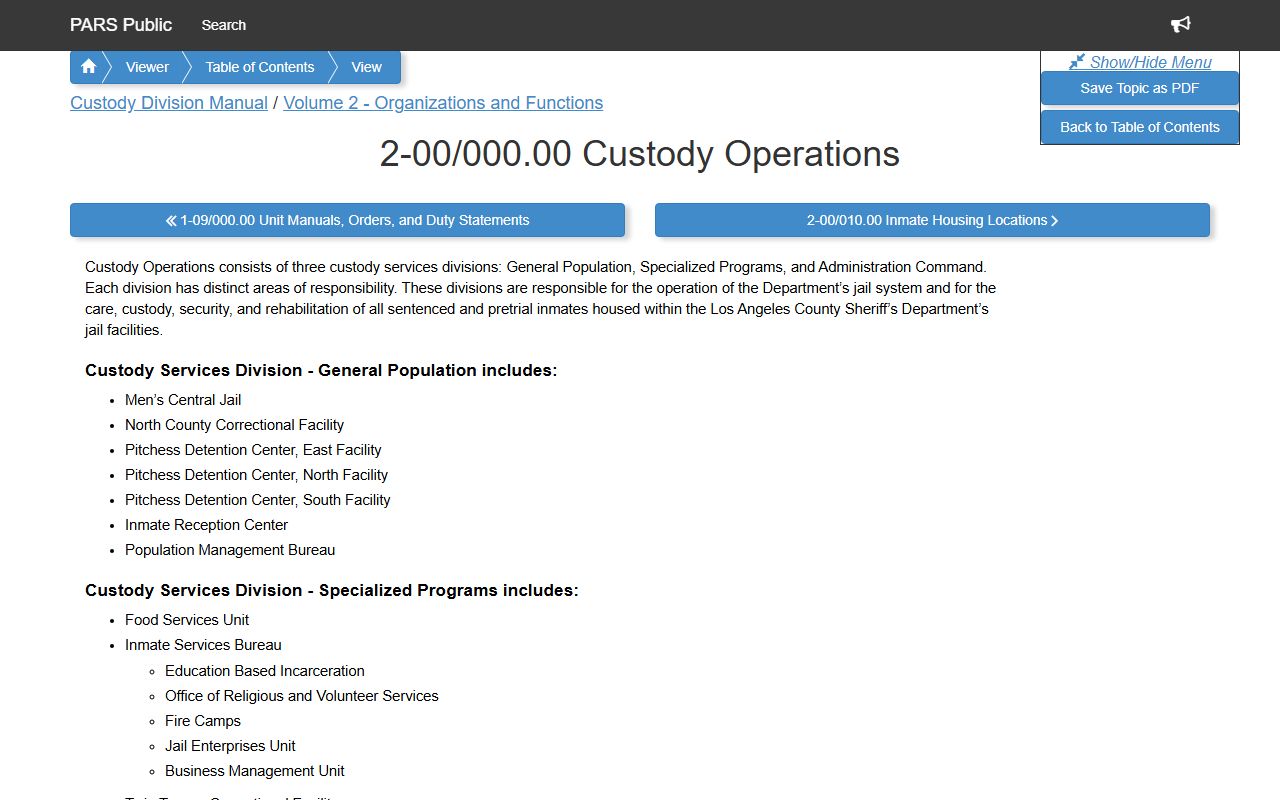
The manual lists Custody Services Division General Population, Specialized Programs, and Administration Command, all of which feed into release reporting.
The LASD Inmate Information Center for Release Date
The Inmate Information Center is the same tool used to check current custody. The Sheriff's Custody Division Manual lists release date as public inmate information. When a release is processed in the system, the inmate's profile shows the release date and may show pending status during the final hours of processing.
Two-hour lag matters here too. Records will not be available for bookings or status changes that took place within the last two hours. A name that drops off the live roster but is not yet showing on a release report may be in that gap. Try again after a few hours, then call.
Note: Release date on the Inmate Information Center reflects Sheriff processing, not the moment the inmate physically left the building, so timing on the two can differ by hours.
Verifying Release by Phone
The two main lines for release verification are (213) 473-6100 for general custody questions and (213) 473-6002 for the Inmate Answering Service. Both are staffed by Sheriff personnel. Have the inmate's full name, date of birth, and booking number ready before calling. The Sheriff's staff can also tell a caller whether a hold from another agency has been lifted.
Written requests for inmate information go to the Custody Division Legal Advisor through the procedures listed on the LASD Records and ID Bureau FAQ. Written requests are slower but useful for older records or for cases where a paper trail is needed.
Setting Up VINELink Release Notifications
VINELink is the official victim notification service. It covers custody status and release alerts for many jails and prisons across the country. California is in the system. A registered user can get a phone call, text, or email when custody status changes. The service is free to the user.
Search the system at vinelink.vineapps.com. Select California, run a name or offender ID search, and register for alerts.
| Field Label | Type | Required | Options / Format Notes |
|---|---|---|---|
| State | dropdown/search | yes | Choose California or relevant custody state. |
| Name | text | optional | Search by offender name. |
| Offender ID | text | optional | Use booking/CDCR/BOP/local identifier if known. |
| Facility/agency | filter | optional | Narrows search if available. |
| Notification registration | account/phone/email | optional | Required for ongoing alerts. |
VINELink alerts often arrive within minutes of the agency's data feed update. The service should not be the only check used in a safety-sensitive case. Pair VINELink with the LASD roster or a phone call to the custody help line.
Searching State Released Inmates Through CDCR
The California Department of Corrections and Rehabilitation covers state prison releases. People sentenced from Los Angeles County to state prison move from Sheriff custody to a CDCR facility. The CIRIS inmate locator at ciris.mt.cdcr.ca.gov returns custody status, location, and parole context.
| Field Label | Type | Required | Options / Format Notes |
|---|---|---|---|
| CDCR Number | text | optional | Exact number search. |
| Last Name | text | optional | Name search. |
| First Name | text | optional | Name search. |
| Middle Name | text | optional | Name search. |
| Age / DOB filters | text/date | optional | Availability depends on current CIRIS interface. |
CDCR Number is the cleanest field for exact matches. A name-only search may return many records. CIRIS does not list every release date on the public face, so a follow-up call to CDCR may be needed for older releases.
Searching Federal Released Inmates Through the BOP
The Federal Bureau of Prisons inmate locator covers people in federal custody and people with a federal release date estimate. Use it for cases in the Central District of California or any other federal district. The locator is at bop.gov/inmateloc.
| Field Label | Type | Required | Options / Format Notes |
|---|---|---|---|
| Find by Number | tab/radio | optional | BOP Register Number, DCDC Number, FBI Number, INS Number. |
| Find by Name | tab/radio | optional | First, middle, last, race, age, sex. |
| First Name | text | optional | Used in name search. |
| Last Name | text | yes for name search | Used in name search. |
| Race | dropdown | optional | BOP filter. |
| Age | number | optional | BOP filter. |
| Sex | dropdown | optional | Male/Female. |
The BOP shows the projected release date for current federal inmates. For people already released, the locator confirms past custody and lists the release date on file. For older federal releases, a written FOIA request to the BOP may be needed.
California Megan's Law Sex Offender Registry
The California Megan's Law site lists registered sex offenders subject to public posting. People released from custody who must register show up on the site after they complete registration with local law enforcement. Use the registry to confirm registration status after release.
Search the site at meganslaw.ca.gov. The site has a name search, an address or ZIP search, and a map search. A use disclaimer must be accepted before any search.
| Field Label | Type | Required | Options / Format Notes |
|---|---|---|---|
| Name | text | optional | Offender name search. |
| Address / city / ZIP | text | optional | Location search. |
| County | dropdown/filter | optional | Los Angeles County filter. |
| Map search | map | optional | Geographic search. |
| Disclaimer acknowledgement | button/checkbox | yes | User must accept use restrictions. |
The registry does not list every sex offender in California. Some records are excluded under state law. The site posts the criteria for what is shown and what is excluded.
Parole and Probation Information
Parole is run by CDCR for people released from state prison. Probation is run by the Los Angeles County Probation Department for people sentenced to county supervision. People released from Sheriff custody may be on probation, mandatory supervision under Penal Code section 1170(h), or post-release community supervision under realignment.
Violation reporting goes through the supervising agency. Information on a person's parole or probation status is not always public. The supervising officer is the right starting point for verified custody status after release.
Reentry Resources in Los Angeles County
The county and a set of partner agencies run reentry services for people leaving Sheriff custody. The LA County Public Defender services page lists in-house social workers and Partners for Justice client advocates. These teams help with housing, jobs, benefits, treatment, and family reunification.
LA County Public Defender
Headquarters and branch offices countywide
Los Angeles, CA
See pubdef.lacounty.gov
211 LA County / LA County Helps
Information and referral line
Los Angeles County
Dial 211
Linked from Public Defender services
211 LA County is linked from the Public Defender site as a help resource. The line connects callers to housing, food, treatment, and crisis services across the county. Information and referrals are free.
The Public Defender services page is shown below. The image links to the source on the official county site.
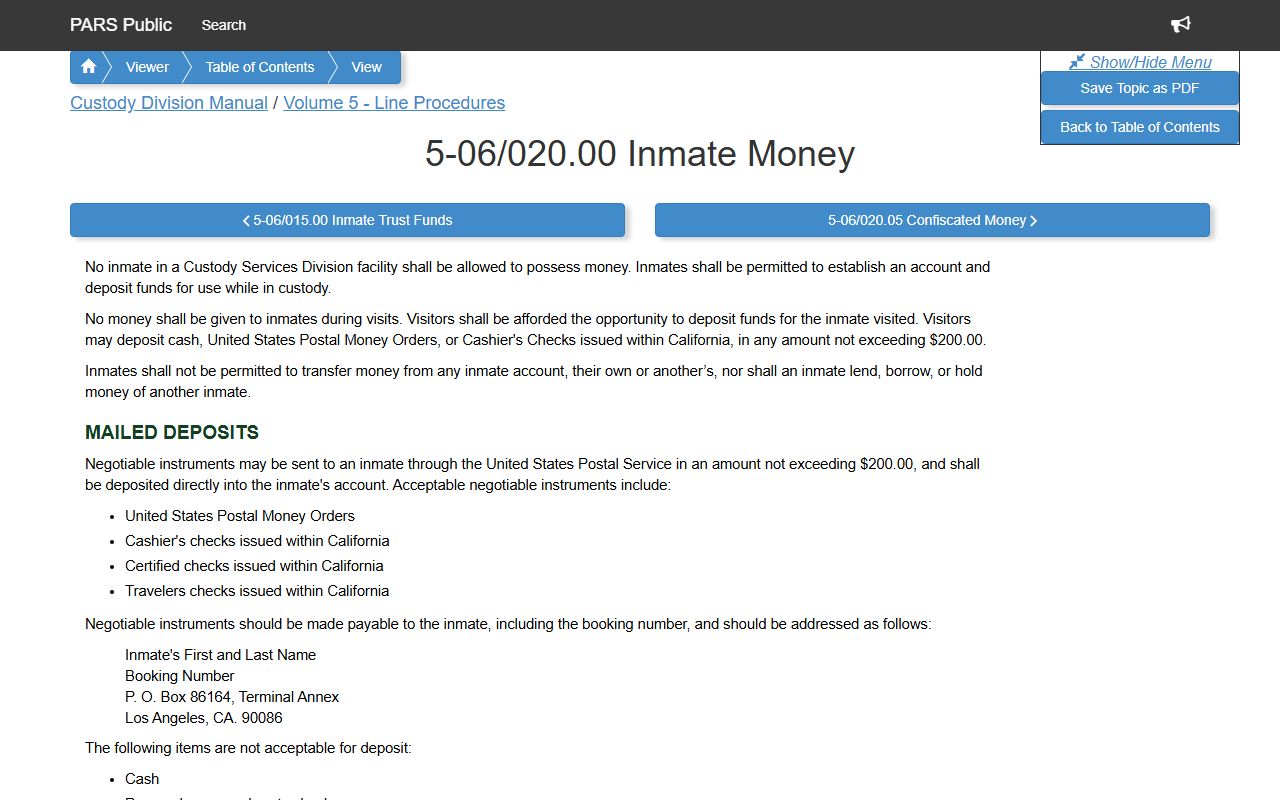
The same manual covers the 90-day unclaimed-money rule that applies after release.
Note: The current LASD page for the Community Re-entry Resource Center, bus tokens, the release door, and current reentry-kit programs was not located in the official source pass, so verify those details with the Sheriff before relying on older news.
Civil Rights Restoration After Release
California voting rights are restored on release in most cases. People with felony convictions in California generally regain voting rights when they are not currently serving a state or federal prison term. This includes people on parole, on probation, on mandatory supervision, or on post-release community supervision. The California Secretary of State is the official source for current voter eligibility.
Firearm rights are a separate question and turn on the specific conviction. Many felony convictions create a lifetime federal firearm ban. State law adds further bans for some misdemeanors. Employment rights, occupational licensing, and housing rights also turn on the conviction record and on Penal Code relief tools like section 1203.4 dismissal.
Money and Property After Release
Sheriff inmate-money policy says money left on a released inmate's account is held for 90 days. After 90 days the money is transferred to the County General Fund. A released inmate should claim funds before the 90-day window closes. Property follows facility rules, and clothing and personal items are returned at release.
The mailing address for the inmate banking unit is P.O. Box 86164, Terminal Annex, Los Angeles, CA 90086. Acceptable items for deposit are U.S. Postal Money Orders, cashier's checks, certified checks, and travelers checks issued in California. The deposit cap is $200 per item. The trust fund cap is $300 in total.
The Sheriff's Station Jail mail policy is shown below. The image links to the source manual entry.
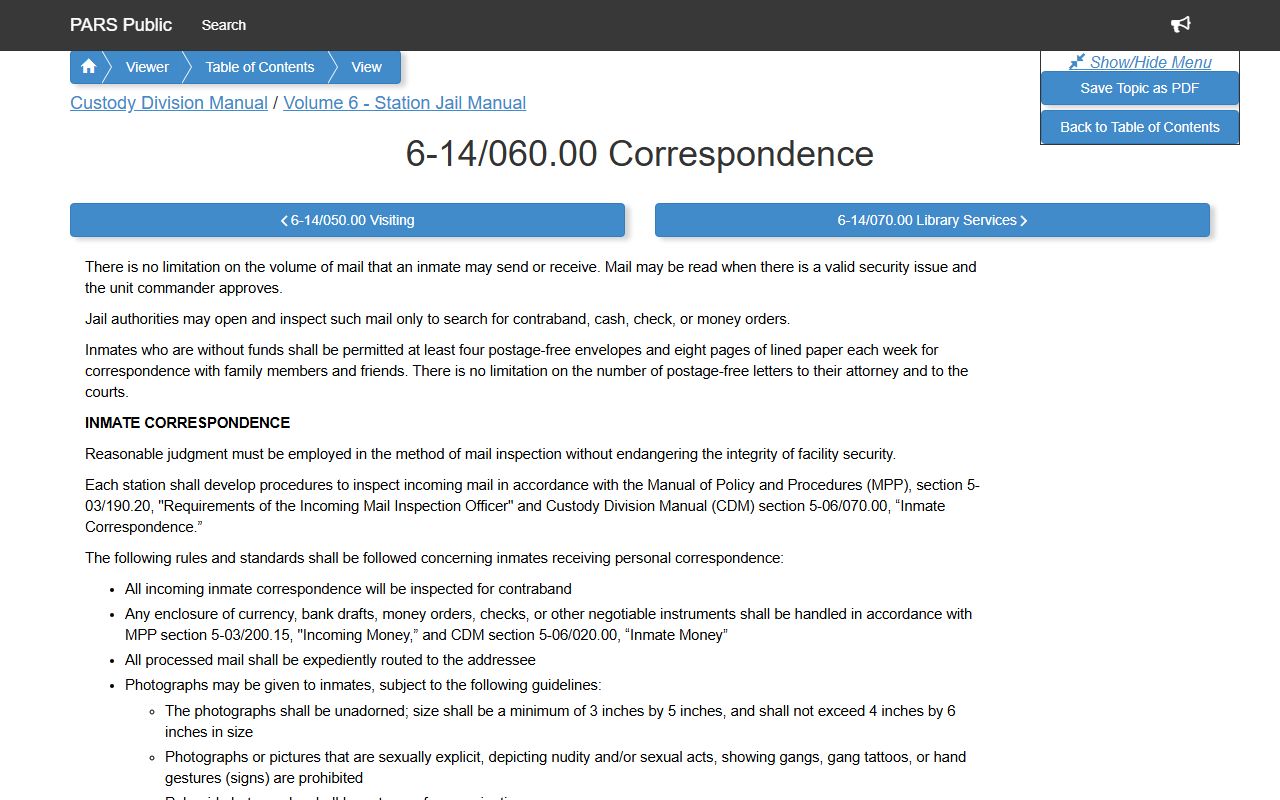
The mail manual also covers indigent postage, which lets a released or in-custody inmate write to family and counsel after release processing.